Lessons from Genesis 16 about waiting, wounded hearts, obedience, and the God who sees
There are moments when God has given us a promise, but the fulfillment seems to be taking far too long.
We prayed.
We believed.
We waited.
And then, somewhere in the waiting, a thought quietly enters our minds:
“Perhaps I need to do something.”
Perhaps I need to make it happen.
Perhaps I need to take matters into my own hands.
Perhaps God needs my help.
That one little word—perhaps—can become the beginning of a chain reaction.
Genesis 16 is the story of what happens when people trade God’s promise for their own solution. It is a story of impatience, compromise, passive leadership, wounded relationships, blame, rejection, and consequences that reach far beyond one moment.
But it is also a story of something far greater:
Grace.
Because even when people fail, God remains faithful.
“A ‘perhaps’ is never a substitute for a promise.”
When Waiting Becomes Difficult
Genesis 16 opens with a painful reality: Sarai had not borne Abram any children.
God had already promised Abram that he would become the father of many nations. God had spoken in Genesis 12 and again in Genesis 15. But years had passed, and Sarai was still childless.
The promise was real.
The waiting was real.
And eventually, the waiting became too difficult.
Sarai said to Abram:
“The Lord has kept me from having children. Go and sleep with my servant. Perhaps I can build a family through her.”
There it is.
Perhaps.
Sarai traded a promise for a perhaps.
Instead of trusting God’s timing, she manufactured her own solution. And notice that she even blamed the Lord: “The Lord has kept me…”
How often do we do the same?
God gives us a promise. We become weary in the waiting. Then we begin devising alternatives that seem practical, reasonable—even spiritual.
But impatience can tempt us to accomplish in the flesh what God intends to accomplish by His Spirit.
Abram: When Faith Gives Way to Convenience
Scripture records Abram’s response in three simple words:
“And Abram agreed.”
Those words carry enormous weight.
Only one chapter earlier, Genesis 15:6 tells us:
“Abram believed the LORD, and he credited it to him as righteousness.”
The man commended for believing God’s promise now agrees to a plan born from unbelief.
Abram traded covenant for convenience.
He could have reminded Sarai of what God had promised.
He could have led his household back to faith.
Instead, he followed passively.
This was more than a bad decision. It was a failure of spiritual leadership.
As leaders in our homes, our greatest responsibility is not simply making decisions. It is keeping our families anchored to the promises of God.
Our homes matter.
“Leadership is not merely making decisions. It is taking responsibility for the decisions we make.”
Three Tragic Trades
Genesis 16 reveals a progression that is both ancient and remarkably relevant to our lives today.
Sarai traded a promise for a “perhaps.”
She relied on human reasoning rather than God’s timing.
Faith gave way to self-reliance.
Abram traded covenant for convenience.
Rather than protecting God’s promise, he compromised with the surrounding culture.
Hagar became more than a servant. She became a concubine—a woman who lived with a man but held a lower status than his wife.
What appeared to be a practical solution was actually unbelief dressed in human wisdom.
Hagar shifted from servant to scorner.
The moment Hagar conceived, the family dynamic changed.
Scripture says that she began treating Sarai with contempt.
The servant who had been lower than her mistress now looked down upon her.
Pride entered the home.
And once pride, compromise, and woundedness enter a relationship, the consequences rarely remain contained.
Sin never travels alone.
The Ripple Effect: Impatience, Compromise, Contempt, Blame, Regret
One decision produced an entire chain reaction.
The progression is sobering:
Impatience → Compromise → Contempt → Blame → Regret
Sarai traded a promise for a perhaps.
Abram traded covenant for convenience.
Hagar shifted from servant to scorner.
Then Sarai turned to Abram:
“It’s all your fault! I put my servant into your arms, and now that she’s pregnant she despises me. May the Lord judge between you and me!”
Notice the irony.
Sarai was the architect of the plan, yet she blamed Abram for the outcome.
How often do we do the same?
When our choices produce painful consequences, our first instinct may be to look for someone else to blame.
Our spouse.
Our children.
Our circumstances.
Our boss.
The government.
The church.
Sometimes even God.
Sarai had already blamed God for withholding children. Now she blamed Abram for agreeing to the solution she had proposed.
Pain can distort perspective.
Instead of leading us toward repentance, it can lead us toward accusation.
Sometimes we even ask God to rescue us from situations that began because we ignored His voice.
Yet even then, His mercy remains available.
When One Person’s Pain Becomes Another Person’s Suffering
Abram responded:
“Your servant is in your hands. Do with her whatever you think is best.”
It may sound like leadership.
It wasn’t.
It was another abdication of responsibility.
Abram had participated in creating the problem, yet he stepped away from its consequences and left Hagar at Sarai’s mercy.
Then Scripture says:
“Then Sarai treated Hagar harshly.”
One woman’s impatience became another woman’s suffering.
And this is one of the most sobering truths in Genesis 16:
Our decisions rarely affect only us.
Our choices affect marriages.
Children.
Friendships.
Churches.
Workplaces.
Generations.
What happens in one heart can eventually show up in an entire family.
Family Dysfunction Is Nothing New
The family of Abraham had received extraordinary promises from God, yet their home had become marked by:
- Pride
- Blame
- Contempt
- Harshness
- Withdrawal
- Broken relationships
Family dysfunction did not begin in the twenty-first century.
The names and circumstances may change, but the human heart has not.
Whenever people choose their own wisdom over God’s, disorder follows.
Whenever pain governs our decisions instead of faith, someone else eventually suffers.
That is why we must be careful not to make permanent decisions from temporary pain.
Hurting people often hurt people.
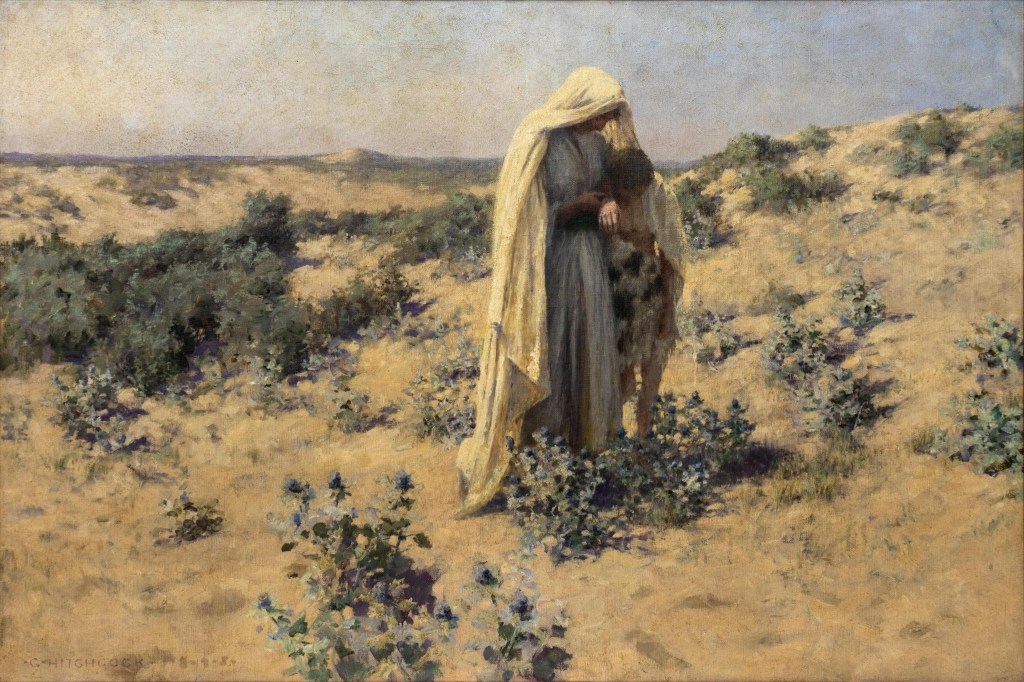
Hagar Runs
Eventually, Hagar could endure no more.
She fled into the wilderness.
Her response was understandable.
She had become the victim of circumstances she did not create. She did not originate the plan. She simply became caught in its consequences.
Many people know exactly what that feels like.
Sometimes it seems easier to run than to remain.
To leave the marriage.
Quit the job.
Walk away from the church.
Abandon the ministry.
Distance ourselves from difficult people.
The Bible is filled with people who ran.
Jonah ran from God’s assignment.
Elijah ran from Jezebel.
The disciples ran when Jesus was arrested.
The prodigal son ran toward a squandered lifestyle.
The Israelites repeatedly wanted to return to Egypt.
Lot’s wife longed for Sodom.
Running is one of humanity’s oldest responses to pain.
But Hagar discovered something in the wilderness:
She wasn’t alone.
The God Who Finds Us
Genesis tells us:
“The Angel of the LORD found Hagar beside a spring of water in the wilderness, along the road to Shur.”
Those words are extraordinary:
The Angel of the LORD found Hagar.
She wasn’t looking for God.
God came looking for her.
Throughout the Old Testament, many biblical scholars understand “the Angel of the LORD” to be either a visible manifestation of God Himself or a pre-incarnate appearance of Christ.
The first person to pursue Hagar was not Abraham.
Not Sarai.
It was God.
Isn’t that the heart of the Gospel?
God seeks those who are hurting.
He pursues the broken.
He comes to those who feel forgotten.
Hagar was a woman.
A slave.
A foreigner.
A servant.
A victim of someone else’s choices.
Yet Heaven sought her.
“She was not looking for God. God came looking for her.”
“Where Have You Come From, and Where Are You Going?”
The Angel asked Hagar:
“Hagar, servant of Sarai, where have you come from, and where are you going?”
God called her by name.
“Hagar.”
He knew her personally.
Then He called her by her current role:
“Servant of Sarai.”
The questions were not because God lacked information.
Sometimes God asks questions because He wants us to discover what is happening inside us.
Where have you come from?
Where are you going?
Hagar answered:
“I am running away from my mistress.”
She answered the first question.
But she had no answer for the second.
She knew what she was leaving.
She did not know where she was going.
How often are we the same?
“I quit.”
“I’m leaving.”
“I’m done.”
But have we prayed about where we are going?
Without God’s direction, the next destination may simply become another wilderness.
Rash decisions often create unnecessary detours.
Hagar had reached the end of herself.
She was alone.
Pregnant.
Rejected.
Wounded.
Afraid.
Yet the wilderness became the place where God revealed Himself.
Sometimes God brings us to the wilderness not to abandon us, but to teach us how to hear His voice.
Return, Submit, and Trust God’s Voice
Hagar may have expected God to affirm her decision to leave.
Instead, the Angel told her:
“Return to your mistress and submit to her authority.”
— Genesis 16:9
That command is difficult.
Why would God send Hagar back into an environment where she had been mistreated?
The answer is not because God approved of Sarai’s behavior.
He did not.
God never condoned the harsh treatment Hagar received.
Rather, God saw something Hagar could not yet see.
Sometimes God’s greatest work is accomplished not by immediately changing our circumstances, but by changing us in the midst of them.
God was not asking Hagar to trust Sarai.
He was asking Hagar to trust Him.
This is an important distinction.
There are seasons when God tells us to stay.
There are seasons when God tells us to go.
There are relationships we may need to leave.
There are jobs we may need to leave.
There are ministries or circumstances from which God may release us.
But we must be certain we are following His voice.
Because the safest place is not always the easiest place.
The safest place is wherever God tells us to be.
When God Says “Stay”—and When God Says “Go”
We see this distinction later in Genesis 21.
This time, it was not Sarai making the decision. God instructed Abraham to listen to Sarah and send Hagar and Ishmael away.
It grieved Abraham, but he obeyed because the instruction came from the Lord.
God then met Hagar again in the wilderness, heard Ishmael’s cries, and reaffirmed His promise concerning her son.
The difference was not simply the action.
The difference was the voice.
One decision was born from human impatience.
The other was born from divine direction.
How many times have we mistaken relief for God’s will?
A Personal Testimony: When God Told Me to Stay
I learned this lesson during my years in the marketplace.
Because of my faith, opposition continued to grow. Eventually, it escalated to the top of the organization.
Everything in me wanted to leave.
I prayed.
I looked for another way.
I wanted relief.
But every time I sought the Lord, He would not release me.
Instead, I sensed Him saying:
“Stay.”
It wasn’t easy.
There were days when I felt misunderstood.
Days when my reputation was attacked.
The Lord continually reminded me that Jesus “made Himself of no reputation.”
He also reminded me of Paul’s words:
“This light affliction is producing for us an eternal weight of glory.”
And I sensed the Lord reminding me:
“I don’t owe you anything, Barbara. I paid it all.”
I never promised there would be no persecution.
He promised He would be with us through it.
Within a year, something remarkable happened.
Rather than removing me, God promoted me.
He increased my responsibilities.
He increased my salary.
He vindicated what I never could have vindicated myself.
Then, nearly five years later, I began sensing another change.
This time, the Lord was speaking.
One by one, He checked every practical box.
Then one morning He spoke to me through Genesis 35:1:
“Arise, go up to Bethel and dwell there.”
Now He was releasing me.
Do you see the difference?
The first time I wanted to leave. God said, “Stay.”
The second time God said, “Go.”
There is tremendous peace when our timing aligns with His.
Don’t Leave Because of an Offense
This principle applies far beyond employment.
It applies in ministry.
Jesus said offenses will come.
Churches experience misunderstandings.
Relationships become strained.
People disappoint us.
But if we leave every place where we become offended, we may simply carry the offense into the next place.
The geography changes.
The heart remains the same.
God wants to heal the wound—not merely relocate it.
The same is true in marriage.
Every marriage experiences disappointment.
Every relationship encounters misunderstanding.
The answer is not always escape.
Sometimes the answer is surrender.
God deals with injustice, rejection, offense, and betrayal far better than we ever can.
When we surrender those hurts to Him, He becomes our defender.
Submission Produces Addition
After telling Hagar to return, the Angel immediately gave her a promise.
Notice the order:
First came obedience. Then came blessing.
The Angel said:
“I will greatly multiply your descendants so that they will be too numerous to count.”
Submission yielded addition.
God was not trying to diminish Hagar.
He was preparing to bless her.
How often do we view submission as loss?
Yet throughout Scripture, surrender becomes a doorway to increase.
Jesus taught that whoever loses his life for His sake will find it.
God’s kingdom often works in reverse from the world’s thinking:
When we humble ourselves, He lifts us up.
When we surrender, He strengthens.
When we trust, He provides.
Ishmael: “God Hears”
Then the Angel declared:
“You shall call his name Ishmael, because the LORD has heard your affliction.”
The name Ishmael means:
“God hears.”
Hagar may have believed that no one cared.
No one saw her pain.
No one understood her suffering.
Yet before she ever cried out to God, God had already heard.
There are seasons when Heaven seems silent.
When prayers seem unanswered.
When suffering feels unnoticed.
But our circumstances do not determine God’s attention.
His Word does.
“I waited patiently for the LORD; He turned to me and heard my cry.”
“Weeping may endure for a night, but joy comes in the morning.”
Our circumstances may tell us that God has forgotten us.
His Word tells us He has not.
The God who heard Hagar still hears every whispered prayer, every silent tear, and every cry uttered in the darkness.
Nothing escapes His attention.
El Roi: The God Who Sees Me
Hagar came to the wilderness believing she had been abandoned.
But she was about to discover something even greater than a God who hears.
She was about to encounter the God who sees.
Genesis records:
“Thereafter, Hagar referred to the LORD, who had spoken to her, as El Roi, for she said, ‘Have I truly seen the One who sees me?’”
What an extraordinary moment.
Hagar called God:
El Roi — “The God Who Sees Me.”
First she discovered the God who hears.
Then she encountered the God who sees.
God saw her suffering.
He saw her rejection.
He saw her loneliness.
He saw the injustice she had endured.
He saw the wounds no one else acknowledged.
He saw her.
And isn’t that what every human heart longs for?
To be truly seen.
Not merely noticed.
Not merely acknowledged.
But fully known and fully loved.
The greatest gift God gave Hagar was not simply a promise about her future.
It was the assurance of His presence.
“The God of Abraham became the God who saw an Egyptian servant in the wilderness.”
God Sees the Overlooked
Consider who Hagar was:
- A woman
- A slave
- A foreigner
- A servant
- Pregnant
- Alone
- Rejected
- A victim of decisions she did not make
In the ancient world, she occupied one of the lowest social positions imaginable.
Yet she became the recipient of divine visitation.
God bypassed kings and princes to meet a forgotten servant in the wilderness.
Throughout Scripture, God repeatedly demonstrates His concern for those society overlooks:
The widow.
The orphan.
The stranger.
The poor.
The brokenhearted.
The rejected.
The outcast.
God sees those the world often fails to notice.
If you have ever wondered whether God sees your pain, Hagar’s story answers the question.
He does.
Where Did Hagar Come From?
There is another fascinating detail in Genesis 16.
Genesis 12:5 tells us that when Abram departed Haran for Canaan, he took with him “the people they had acquired in Haran.” Yet when Hagar appears in Genesis 16, she is specifically identified as “Hagar the Egyptian.”
Where did she come from?
Scripture does not explicitly tell us.
Many biblical scholars conclude that Hagar entered Abraham’s household during Abram’s earlier journey into Egypt.
Abram’s deception in Egypt—when he presented Sarai as his sister—resulted in Pharaoh giving Abram possessions and servants. Hagar may have been among those who entered his household during that experience.
This creates a sobering picture:
Abram left a back door open, inviting Egypt into his household.
As believers, we must be careful about what we allow back into our lives.
Many commentators also notice a remarkable reversal:
An Egyptian slave was afflicted in Abraham’s household.
Centuries later, Abraham’s descendants would become afflicted as slaves in Egypt.
The consequences of one compromise echoed through generations.
What Does “Egypt” Represent?
Throughout Scripture, Egypt often represents more than a geographical location.
It becomes a picture of the old life apart from God.
Egypt represents bondage.
It represents self-reliance.
It represents false security.
Israel depended upon rain from heaven. Egypt depended upon the predictable flooding of the Nile. Spiritually, Egypt became a picture of trusting human resources instead of divine provision.
The prophets repeatedly warned Israel not to look to Egypt for security.
Whenever we rely on human wisdom instead of God’s promises, we begin importing “Egypt” into our lives and our homes.
Sarai’s “perhaps” opened the door to years of heartache.
And it leaves us with an important question:
How many of our struggles begin when we trust human reasoning over God’s Word?
Grace Beyond Regret
Yet Genesis 16 is not ultimately a story about failure.
It is a story about grace.
God did not revoke His covenant with Abraham.
He did not erase Ishmael.
He did not abandon Hagar.
Grace operated alongside consequence.
That is one of the great mysteries of God’s redemptive work.
Human beings make sinful choices.
God never approves of those choices.
Yet in His sovereignty, He continues accomplishing His purposes.
Our failures cannot cancel His faithfulness.
Our mistakes cannot exhaust His mercy.
God redeems outcomes without endorsing disobedience.
How many of us carry regrets?
“If only…”
“I should have…”
“I wish…”
The enemy wants us to believe our failures have permanently disqualified us.
But God specializes in redeeming our could have, would have, and should have.
His grace is greater than our regret.
What Is Your “Perhaps”?
Maybe Genesis 16 has brought someone to mind.
Maybe you have been Sarai—trying to help God fulfill His promise through your own efforts.
Maybe you have been Abram—remaining passive when God called you to lead.
Maybe you have been Hagar—wounded by someone else’s decisions.
Maybe you have been running.
Maybe you are standing in a wilderness wondering whether anyone notices your pain.
Maybe you have been asking:
“Does God really see me?”
The answer from Genesis 16 is unmistakable:
Yes.
He hears.
He sees.
He pursues.
He restores.
He redeems.
So what are you doing while you wait?
Are you standing on His promise?
Or are you beginning to build a “perhaps”?
The temptation is always the same:
“If God hasn’t done it yet, maybe I should help Him.”
But Genesis 16 reminds us that every “perhaps” carries consequences.
God’s promises require patience over perhaps.
“Do not trade God’s promise for a ‘perhaps.’”
Whatever you are waiting for—restoration, healing, provision, salvation for a loved one, direction, deliverance—remember that God’s timing is not evidence of God’s absence.
Wait on His timing.
Trust His voice.
Submit to His leading.
And do not make permanent decisions from temporary pain.
The God Who Sees You
This year has been declared by many as a year of Jubilee—a season that reminds us of God’s heart for rest, release, restoration, and redemption.
Perhaps this is the season to surrender the “perhaps.”
Surrender the need to make it happen.
Surrender the offense.
Surrender the regret.
Surrender the fear.
Surrender the need to understand everything.
And trust the God who sees.
Because the God who heard Hagar still hears.
The God who saw Hagar still sees.
And the God who redeemed Abraham’s failures is still redeeming lives today.
He is El Roi.
The God Who Sees Me.
The God Who Sees You.
A Closing Prayer
Father,
Thank You that You are the God who hears and the God who sees.
Thank You that nothing escapes Your attention—not our tears, our disappointments, our wounds, our prayers, or the circumstances we cannot understand.
Forgive us for the times we have traded Your promises for our own “perhaps.” Forgive us when impatience has caused us to take matters into our own hands, when we have relied on human wisdom instead of Your Word, or when we have tried to force what You have asked us to trust You to accomplish.
Teach us to wait.
Teach us to listen.
Teach us to recognize Your voice.
Give us wisdom to know when You are saying “stay” and when You are saying “go.” Help us never to confuse temporary relief with Your perfect will.
Heal the places in us that have been wounded by rejection, injustice, betrayal, disappointment, and offense. Keep us from carrying unresolved pain into our next season.
Where we have hurt others, give us humility to repent.
Where others have wounded us, give us grace to surrender the offense to You.
Where we have made mistakes, remind us that our failures cannot cancel Your faithfulness.
Where we have regrets, remind us that Your grace is greater than our “if only,” “I should have,” and “I wish.”
Father, help us trust You when we cannot see what You are doing.
Help us stand on Your promises when the fulfillment seems delayed.
And when we find ourselves in the wilderness, remind us that we are not forgotten.
You see us.
You know us.
You hear us.
You pursue us.
You are with us.
Thank You for being El Roi—the God Who Sees.
May we never trade Your promise for a “perhaps.”
May our homes be anchored in Your Word.
May our decisions be directed by Your Spirit.
May our lives testify that You are faithful.
And may we learn to trust You—not only for what You have promised to give us, but simply because You are God.
In the name of Jesus,
Amen.
This version is designed to work both as a long-form website/blog article and as a teaching piece that can be excerpted into social posts or ELTV content.