
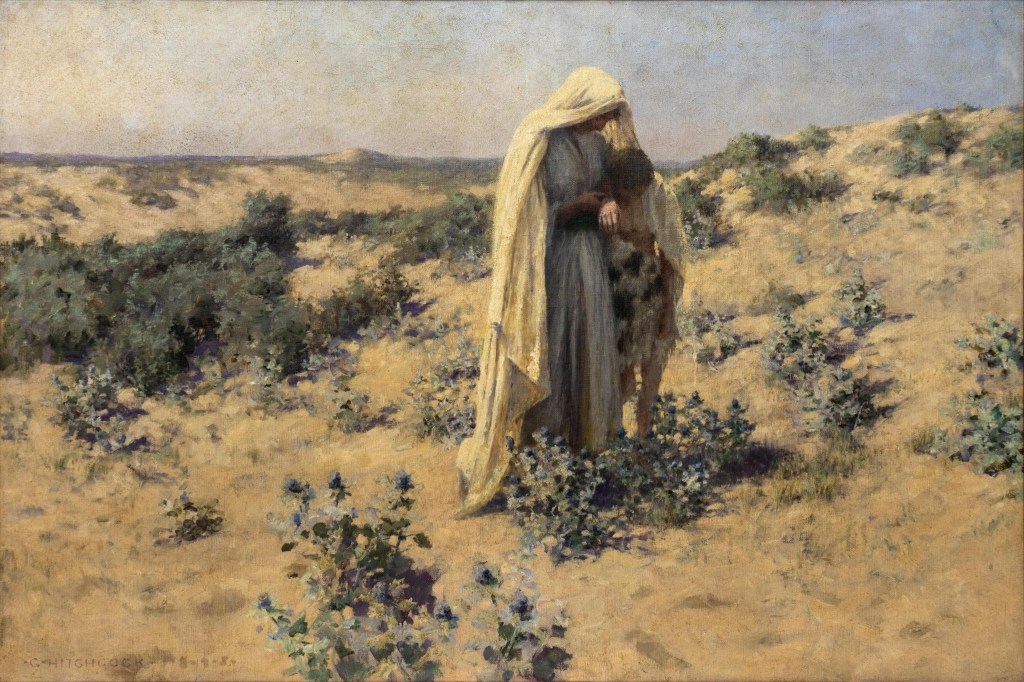
When We Trade God’s Promise for a “Perhaps”

Lessons from Genesis 16 about waiting, wounded hearts, obedience, and the God who sees

There are moments when God has given us a promise, but the fulfillment seems to be taking far too long.

We prayed.

We believed.

We waited.

And then, somewhere in the waiting, a thought quietly enters our minds:

“Perhaps I need to do something.”

Perhaps I need to make it happen.

Perhaps I need to take matters into my own hands.

Perhaps God needs my help.

That one little word—perhaps—can become the beginning of a chain reaction.

Genesis 16 is the story of what happens when people trade God’s promise for their own solution. It is a story of impatience, compromise, passive leadership, wounded relationships, blame, rejection, and consequences that reach far beyond one moment.

But it is also a story of something far greater:

Grace.

Because even when people fail, God remains faithful.

“A ‘perhaps’ is never a substitute for a promise.”


When Waiting Becomes Difficult

Genesis 16 opens with a painful reality: Sarai had not borne Abram any children.

God had already promised Abram that he would become the father of many nations. God had spoken in Genesis 12 and again in Genesis 15. But years had passed, and Sarai was still childless.

The promise was real.

The waiting was real.

And eventually, the waiting became too difficult.

Sarai said to Abram:

“The Lord has kept me from having children. Go and sleep with my servant. Perhaps I can build a family through her.”

There it is.

Perhaps.

Sarai traded a promise for a perhaps.

Instead of trusting God’s timing, she manufactured her own solution. And notice that she even blamed the Lord: “The Lord has kept me…”

How often do we do the same?

God gives us a promise. We become weary in the waiting. Then we begin devising alternatives that seem practical, reasonable—even spiritual.

But impatience can tempt us to accomplish in the flesh what God intends to accomplish by His Spirit.


Abram: When Faith Gives Way to Convenience

Scripture records Abram’s response in three simple words:

“And Abram agreed.”

Those words carry enormous weight.

Only one chapter earlier, Genesis 15:6 tells us:

“Abram believed the LORD, and he credited it to him as righteousness.”

The man commended for believing God’s promise now agrees to a plan born from unbelief.

Abram traded covenant for convenience.

He could have reminded Sarai of what God had promised.

He could have led his household back to faith.

Instead, he followed passively.

This was more than a bad decision. It was a failure of spiritual leadership.

As leaders in our homes, our greatest responsibility is not simply making decisions. It is keeping our families anchored to the promises of God.

Our homes matter.

“Leadership is not merely making decisions. It is taking responsibility for the decisions we make.”


Three Tragic Trades

Genesis 16 reveals a progression that is both ancient and remarkably relevant to our lives today.

Sarai traded a promise for a “perhaps.”

She relied on human reasoning rather than God’s timing.

Faith gave way to self-reliance.

Abram traded covenant for convenience.

Rather than protecting God’s promise, he compromised with the surrounding culture.

Hagar became more than a servant. She became a concubine—a woman who lived with a man but held a lower status than his wife.

What appeared to be a practical solution was actually unbelief dressed in human wisdom.

Hagar shifted from servant to scorner.

The moment Hagar conceived, the family dynamic changed.

Scripture says that she began treating Sarai with contempt.

The servant who had been lower than her mistress now looked down upon her.

Pride entered the home.

And once pride, compromise, and woundedness enter a relationship, the consequences rarely remain contained.

Sin never travels alone.


The Ripple Effect: Impatience, Compromise, Contempt, Blame, Regret

One decision produced an entire chain reaction.

The progression is sobering:

Impatience → Compromise → Contempt → Blame → Regret

Sarai traded a promise for a perhaps.

Abram traded covenant for convenience.

Hagar shifted from servant to scorner.

Then Sarai turned to Abram:

“It’s all your fault! I put my servant into your arms, and now that she’s pregnant she despises me. May the Lord judge between you and me!”

Notice the irony.

Sarai was the architect of the plan, yet she blamed Abram for the outcome.

How often do we do the same?

When our choices produce painful consequences, our first instinct may be to look for someone else to blame.

Our spouse.

Our children.

Our circumstances.

Our boss.

The government.

The church.

Sometimes even God.

Sarai had already blamed God for withholding children. Now she blamed Abram for agreeing to the solution she had proposed.

Pain can distort perspective.

Instead of leading us toward repentance, it can lead us toward accusation.

Sometimes we even ask God to rescue us from situations that began because we ignored His voice.

Yet even then, His mercy remains available.


When One Person’s Pain Becomes Another Person’s Suffering

Abram responded:

“Your servant is in your hands. Do with her whatever you think is best.”

It may sound like leadership.

It wasn’t.

It was another abdication of responsibility.

Abram had participated in creating the problem, yet he stepped away from its consequences and left Hagar at Sarai’s mercy.

Then Scripture says:

“Then Sarai treated Hagar harshly.”

One woman’s impatience became another woman’s suffering.

And this is one of the most sobering truths in Genesis 16:

Our decisions rarely affect only us.

Our choices affect marriages.

Children.

Friendships.

Churches.

Workplaces.

Generations.

What happens in one heart can eventually show up in an entire family.


Family Dysfunction Is Nothing New

The family of Abraham had received extraordinary promises from God, yet their home had become marked by:

  • Pride
  • Blame
  • Contempt
  • Harshness
  • Withdrawal
  • Broken relationships

Family dysfunction did not begin in the twenty-first century.

The names and circumstances may change, but the human heart has not.

Whenever people choose their own wisdom over God’s, disorder follows.

Whenever pain governs our decisions instead of faith, someone else eventually suffers.

That is why we must be careful not to make permanent decisions from temporary pain.

Hurting people often hurt people.


Hagar Runs

Eventually, Hagar could endure no more.

She fled into the wilderness.

Her response was understandable.

She had become the victim of circumstances she did not create. She did not originate the plan. She simply became caught in its consequences.

Many people know exactly what that feels like.

Sometimes it seems easier to run than to remain.

To leave the marriage.

Quit the job.

Walk away from the church.

Abandon the ministry.

Distance ourselves from difficult people.

The Bible is filled with people who ran.

Jonah ran from God’s assignment.

Elijah ran from Jezebel.

The disciples ran when Jesus was arrested.

The prodigal son ran toward a squandered lifestyle.

The Israelites repeatedly wanted to return to Egypt.

Lot’s wife longed for Sodom.

Running is one of humanity’s oldest responses to pain.

But Hagar discovered something in the wilderness:

She wasn’t alone.


The God Who Finds Us

Genesis tells us:

“The Angel of the LORD found Hagar beside a spring of water in the wilderness, along the road to Shur.”

Those words are extraordinary:

The Angel of the LORD found Hagar.

She wasn’t looking for God.

God came looking for her.

Throughout the Old Testament, many biblical scholars understand “the Angel of the LORD” to be either a visible manifestation of God Himself or a pre-incarnate appearance of Christ.

The first person to pursue Hagar was not Abraham.

Not Sarai.

It was God.

Isn’t that the heart of the Gospel?

God seeks those who are hurting.

He pursues the broken.

He comes to those who feel forgotten.

Hagar was a woman.

A slave.

A foreigner.

A servant.

A victim of someone else’s choices.

Yet Heaven sought her.

“She was not looking for God. God came looking for her.”


“Where Have You Come From, and Where Are You Going?”

The Angel asked Hagar:

“Hagar, servant of Sarai, where have you come from, and where are you going?”

God called her by name.

“Hagar.”

He knew her personally.

Then He called her by her current role:

“Servant of Sarai.”

The questions were not because God lacked information.

Sometimes God asks questions because He wants us to discover what is happening inside us.

Where have you come from?

Where are you going?

Hagar answered:

“I am running away from my mistress.”

She answered the first question.

But she had no answer for the second.

She knew what she was leaving.

She did not know where she was going.

How often are we the same?

“I quit.”

“I’m leaving.”

“I’m done.”

But have we prayed about where we are going?

Without God’s direction, the next destination may simply become another wilderness.

Rash decisions often create unnecessary detours.

Hagar had reached the end of herself.

She was alone.

Pregnant.

Rejected.

Wounded.

Afraid.

Yet the wilderness became the place where God revealed Himself.

Sometimes God brings us to the wilderness not to abandon us, but to teach us how to hear His voice.


Return, Submit, and Trust God’s Voice

Hagar may have expected God to affirm her decision to leave.

Instead, the Angel told her:

“Return to your mistress and submit to her authority.”
— Genesis 16:9

That command is difficult.

Why would God send Hagar back into an environment where she had been mistreated?

The answer is not because God approved of Sarai’s behavior.

He did not.

God never condoned the harsh treatment Hagar received.

Rather, God saw something Hagar could not yet see.

Sometimes God’s greatest work is accomplished not by immediately changing our circumstances, but by changing us in the midst of them.

God was not asking Hagar to trust Sarai.

He was asking Hagar to trust Him.

This is an important distinction.

There are seasons when God tells us to stay.

There are seasons when God tells us to go.

There are relationships we may need to leave.

There are jobs we may need to leave.

There are ministries or circumstances from which God may release us.

But we must be certain we are following His voice.

Because the safest place is not always the easiest place.

The safest place is wherever God tells us to be.


When God Says “Stay”—and When God Says “Go”

We see this distinction later in Genesis 21.

This time, it was not Sarai making the decision. God instructed Abraham to listen to Sarah and send Hagar and Ishmael away.

It grieved Abraham, but he obeyed because the instruction came from the Lord.

God then met Hagar again in the wilderness, heard Ishmael’s cries, and reaffirmed His promise concerning her son.

The difference was not simply the action.

The difference was the voice.

One decision was born from human impatience.

The other was born from divine direction.

How many times have we mistaken relief for God’s will?


A Personal Testimony: When God Told Me to Stay

I learned this lesson during my years in the marketplace.

Because of my faith, opposition continued to grow. Eventually, it escalated to the top of the organization.

Everything in me wanted to leave.

I prayed.

I looked for another way.

I wanted relief.

But every time I sought the Lord, He would not release me.

Instead, I sensed Him saying:

“Stay.”

It wasn’t easy.

There were days when I felt misunderstood.

Days when my reputation was attacked.

The Lord continually reminded me that Jesus “made Himself of no reputation.”

He also reminded me of Paul’s words:

“This light affliction is producing for us an eternal weight of glory.”

And I sensed the Lord reminding me:

“I don’t owe you anything, Barbara. I paid it all.”

I never promised there would be no persecution.

He promised He would be with us through it.

Within a year, something remarkable happened.

Rather than removing me, God promoted me.

He increased my responsibilities.

He increased my salary.

He vindicated what I never could have vindicated myself.

Then, nearly five years later, I began sensing another change.

This time, the Lord was speaking.

One by one, He checked every practical box.

Then one morning He spoke to me through Genesis 35:1:

“Arise, go up to Bethel and dwell there.”

Now He was releasing me.

Do you see the difference?

The first time I wanted to leave. God said, “Stay.”

The second time God said, “Go.”

There is tremendous peace when our timing aligns with His.


Don’t Leave Because of an Offense

This principle applies far beyond employment.

It applies in ministry.

Jesus said offenses will come.

Churches experience misunderstandings.

Relationships become strained.

People disappoint us.

But if we leave every place where we become offended, we may simply carry the offense into the next place.

The geography changes.

The heart remains the same.

God wants to heal the wound—not merely relocate it.

The same is true in marriage.

Every marriage experiences disappointment.

Every relationship encounters misunderstanding.

The answer is not always escape.

Sometimes the answer is surrender.

God deals with injustice, rejection, offense, and betrayal far better than we ever can.

When we surrender those hurts to Him, He becomes our defender.


Submission Produces Addition

After telling Hagar to return, the Angel immediately gave her a promise.

Notice the order:

First came obedience. Then came blessing.

The Angel said:

“I will greatly multiply your descendants so that they will be too numerous to count.”

Submission yielded addition.

God was not trying to diminish Hagar.

He was preparing to bless her.

How often do we view submission as loss?

Yet throughout Scripture, surrender becomes a doorway to increase.

Jesus taught that whoever loses his life for His sake will find it.

God’s kingdom often works in reverse from the world’s thinking:

When we humble ourselves, He lifts us up.

When we surrender, He strengthens.

When we trust, He provides.


Ishmael: “God Hears”

Then the Angel declared:

“You shall call his name Ishmael, because the LORD has heard your affliction.”

The name Ishmael means:

“God hears.”

Hagar may have believed that no one cared.

No one saw her pain.

No one understood her suffering.

Yet before she ever cried out to God, God had already heard.

There are seasons when Heaven seems silent.

When prayers seem unanswered.

When suffering feels unnoticed.

But our circumstances do not determine God’s attention.

His Word does.

“I waited patiently for the LORD; He turned to me and heard my cry.”

“Weeping may endure for a night, but joy comes in the morning.”

Our circumstances may tell us that God has forgotten us.

His Word tells us He has not.

The God who heard Hagar still hears every whispered prayer, every silent tear, and every cry uttered in the darkness.

Nothing escapes His attention.


El Roi: The God Who Sees Me

Hagar came to the wilderness believing she had been abandoned.

But she was about to discover something even greater than a God who hears.

She was about to encounter the God who sees.

Genesis records:

“Thereafter, Hagar referred to the LORD, who had spoken to her, as El Roi, for she said, ‘Have I truly seen the One who sees me?’”

What an extraordinary moment.

Hagar called God:

El Roi — “The God Who Sees Me.”

First she discovered the God who hears.

Then she encountered the God who sees.

God saw her suffering.

He saw her rejection.

He saw her loneliness.

He saw the injustice she had endured.

He saw the wounds no one else acknowledged.

He saw her.

And isn’t that what every human heart longs for?

To be truly seen.

Not merely noticed.

Not merely acknowledged.

But fully known and fully loved.

The greatest gift God gave Hagar was not simply a promise about her future.

It was the assurance of His presence.

“The God of Abraham became the God who saw an Egyptian servant in the wilderness.”


God Sees the Overlooked

Consider who Hagar was:

  • A woman
  • A slave
  • A foreigner
  • A servant
  • Pregnant
  • Alone
  • Rejected
  • A victim of decisions she did not make

In the ancient world, she occupied one of the lowest social positions imaginable.

Yet she became the recipient of divine visitation.

God bypassed kings and princes to meet a forgotten servant in the wilderness.

Throughout Scripture, God repeatedly demonstrates His concern for those society overlooks:

The widow.

The orphan.

The stranger.

The poor.

The brokenhearted.

The rejected.

The outcast.

God sees those the world often fails to notice.

If you have ever wondered whether God sees your pain, Hagar’s story answers the question.

He does.


Where Did Hagar Come From?

There is another fascinating detail in Genesis 16.

Genesis 12:5 tells us that when Abram departed Haran for Canaan, he took with him “the people they had acquired in Haran.” Yet when Hagar appears in Genesis 16, she is specifically identified as “Hagar the Egyptian.”

Where did she come from?

Scripture does not explicitly tell us.

Many biblical scholars conclude that Hagar entered Abraham’s household during Abram’s earlier journey into Egypt.

Abram’s deception in Egypt—when he presented Sarai as his sister—resulted in Pharaoh giving Abram possessions and servants. Hagar may have been among those who entered his household during that experience.

This creates a sobering picture:

Abram left a back door open, inviting Egypt into his household.

As believers, we must be careful about what we allow back into our lives.

Many commentators also notice a remarkable reversal:

An Egyptian slave was afflicted in Abraham’s household.

Centuries later, Abraham’s descendants would become afflicted as slaves in Egypt.

The consequences of one compromise echoed through generations.


What Does “Egypt” Represent?

Throughout Scripture, Egypt often represents more than a geographical location.

It becomes a picture of the old life apart from God.

Egypt represents bondage.

It represents self-reliance.

It represents false security.

Israel depended upon rain from heaven. Egypt depended upon the predictable flooding of the Nile. Spiritually, Egypt became a picture of trusting human resources instead of divine provision.

The prophets repeatedly warned Israel not to look to Egypt for security.

Whenever we rely on human wisdom instead of God’s promises, we begin importing “Egypt” into our lives and our homes.

Sarai’s “perhaps” opened the door to years of heartache.

And it leaves us with an important question:

How many of our struggles begin when we trust human reasoning over God’s Word?


Grace Beyond Regret

Yet Genesis 16 is not ultimately a story about failure.

It is a story about grace.

God did not revoke His covenant with Abraham.

He did not erase Ishmael.

He did not abandon Hagar.

Grace operated alongside consequence.

That is one of the great mysteries of God’s redemptive work.

Human beings make sinful choices.

God never approves of those choices.

Yet in His sovereignty, He continues accomplishing His purposes.

Our failures cannot cancel His faithfulness.

Our mistakes cannot exhaust His mercy.

God redeems outcomes without endorsing disobedience.

How many of us carry regrets?

“If only…”

“I should have…”

“I wish…”

The enemy wants us to believe our failures have permanently disqualified us.

But God specializes in redeeming our could have, would have, and should have.

His grace is greater than our regret.


What Is Your “Perhaps”?

Maybe Genesis 16 has brought someone to mind.

Maybe you have been Sarai—trying to help God fulfill His promise through your own efforts.

Maybe you have been Abram—remaining passive when God called you to lead.

Maybe you have been Hagar—wounded by someone else’s decisions.

Maybe you have been running.

Maybe you are standing in a wilderness wondering whether anyone notices your pain.

Maybe you have been asking:

“Does God really see me?”

The answer from Genesis 16 is unmistakable:

Yes.

He hears.

He sees.

He pursues.

He restores.

He redeems.

So what are you doing while you wait?

Are you standing on His promise?

Or are you beginning to build a “perhaps”?

The temptation is always the same:

“If God hasn’t done it yet, maybe I should help Him.”

But Genesis 16 reminds us that every “perhaps” carries consequences.

God’s promises require patience over perhaps.

“Do not trade God’s promise for a ‘perhaps.’”

Whatever you are waiting for—restoration, healing, provision, salvation for a loved one, direction, deliverance—remember that God’s timing is not evidence of God’s absence.

Wait on His timing.

Trust His voice.

Submit to His leading.

And do not make permanent decisions from temporary pain.


The God Who Sees You

This year has been declared by many as a year of Jubilee—a season that reminds us of God’s heart for rest, release, restoration, and redemption.

Perhaps this is the season to surrender the “perhaps.”

Surrender the need to make it happen.

Surrender the offense.

Surrender the regret.

Surrender the fear.

Surrender the need to understand everything.

And trust the God who sees.

Because the God who heard Hagar still hears.

The God who saw Hagar still sees.

And the God who redeemed Abraham’s failures is still redeeming lives today.

He is El Roi.

The God Who Sees Me.

The God Who Sees You.


A Closing Prayer

Father,

Thank You that You are the God who hears and the God who sees.

Thank You that nothing escapes Your attention—not our tears, our disappointments, our wounds, our prayers, or the circumstances we cannot understand.

Forgive us for the times we have traded Your promises for our own “perhaps.” Forgive us when impatience has caused us to take matters into our own hands, when we have relied on human wisdom instead of Your Word, or when we have tried to force what You have asked us to trust You to accomplish.

Teach us to wait.

Teach us to listen.

Teach us to recognize Your voice.

Give us wisdom to know when You are saying “stay” and when You are saying “go.” Help us never to confuse temporary relief with Your perfect will.

Heal the places in us that have been wounded by rejection, injustice, betrayal, disappointment, and offense. Keep us from carrying unresolved pain into our next season.

Where we have hurt others, give us humility to repent.

Where others have wounded us, give us grace to surrender the offense to You.

Where we have made mistakes, remind us that our failures cannot cancel Your faithfulness.

Where we have regrets, remind us that Your grace is greater than our “if only,” “I should have,” and “I wish.”

Father, help us trust You when we cannot see what You are doing.

Help us stand on Your promises when the fulfillment seems delayed.

And when we find ourselves in the wilderness, remind us that we are not forgotten.

You see us.

You know us.

You hear us.

You pursue us.

You are with us.

Thank You for being El Roi—the God Who Sees.

May we never trade Your promise for a “perhaps.”

May our homes be anchored in Your Word.

May our decisions be directed by Your Spirit.

May our lives testify that You are faithful.

And may we learn to trust You—not only for what You have promised to give us, but simply because You are God.

In the name of Jesus,

Amen.

This version is designed to work both as a long-form website/blog article and as a teaching piece that can be excerpted into social posts or ELTV content.
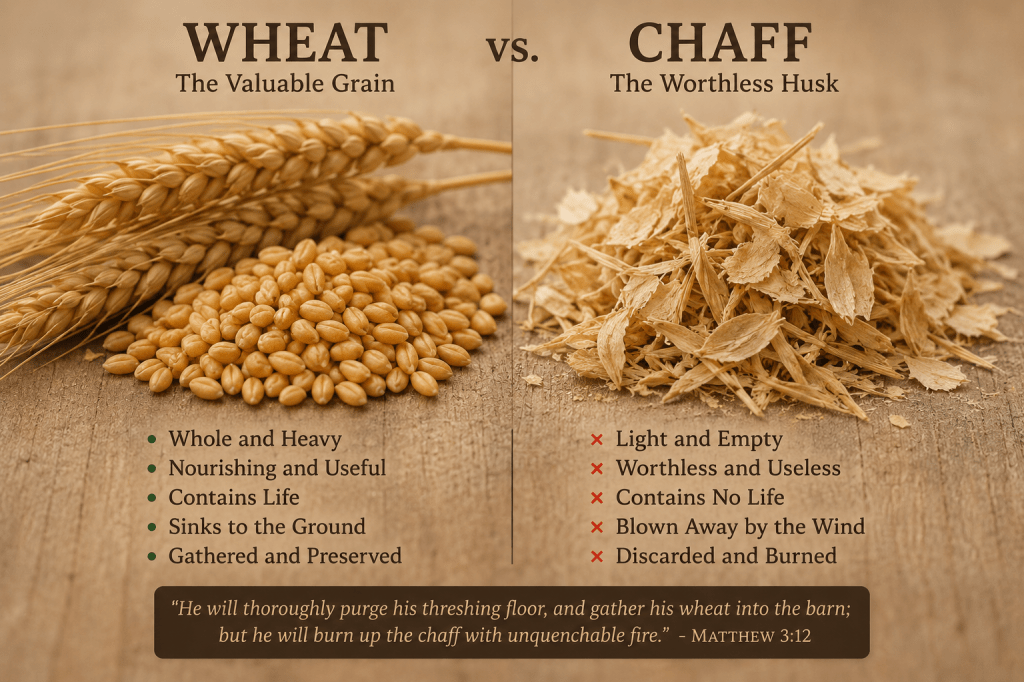

Exodus 32:5 and the Danger of Hybrid Worship: The Principle of Mingled Seed

The Golden Calf: More Than Simple Idolatry

Exodus 32:5 (KJV) says:

“And when Aaron saw it, he built an altar before it; and Aaron made a proclamation, and said, Tomorrow is a feast to the LORD.”

This verse occurs in the middle of Israel’s infamous golden calf incident.

While Moses was on Mount Sinai receiving God’s law, the people grew impatient. They pressured Aaron to make them a visible god they could worship. Aaron collected their gold, fashioned a golden calf, and presented it to the nation.

Most readers focus on the idol itself. However, Aaron’s actions reveal something even more dangerous than outright paganism.

The passage says that Aaron “built an altar before it.”

An altar was a sacred place of worship. Altars were where sacrifices were offered to Yahweh. By building an altar before the calf, Aaron gave legitimacy to the idol. He treated it as though it were a proper representation of God.

Then Aaron acted as a priest.

The Scripture says he “made a proclamation” and announced:

“Tomorrow is a feast to the LORD.”

What makes this especially striking is that Aaron used the covenant name of God—Yahweh. He did not declare a feast to a foreign god. He declared a feast to the LORD.

Aaron attempted to merge the worship of Yahweh with idolatry.

He did not deny God; he redefined Him.

Yet God had already forbidden such practices:

“Thou shalt not make unto thee any graven image…” (Exodus 20:4-5)

The golden calf became a distorted substitute for the invisible, holy God. It reveals humanity’s tendency to desire something tangible, visible, and controllable—even at the expense of truth.


The Biblical Principle of Mingled Seed

The events of Exodus 32 illustrate a broader biblical principle that appears throughout Scripture.

Leviticus 19:19

“Thou shalt not sow thy field with mingled seed…”

Deuteronomy 22:9

“Thou shalt not sow thy vineyard with divers seeds…”

At first glance, these appear to be agricultural regulations. Yet throughout Scripture, God often uses physical realities to teach spiritual truths.

These commands point to a larger principle:

God’s Principle

  • What is mixed cannot remain pure.
  • What is hybrid cannot reproduce true fruit.
  • What is mingled eventually mutates.
  • God protects identity, fruitfulness, and holiness by forbidding mixture.

In agriculture, mixed seed produces uncertain results. The harvest loses purity and consistency.

Likewise, spiritual mixture corrupts faith.


Exodus 32: The First Great Hybrid

Aaron’s declaration—”Tomorrow is a feast to the LORD”—is the perfect example of spiritual mingling.

Notice the mixture:

  • Yahweh’s name
  • Pagan imagery
  • A legitimate altar
  • An illegitimate object of worship

The people did not completely abandon God.

They simply reshaped Him into something more comfortable.

Exodus 20 said:

“No images.”

Exodus 32 replied:

“We’ll still call it worship.”

This is the essence of mingled seed:

God’s name + man’s methods = corruption.

This was not pure paganism.

It was hybrid worship.


Hybrid Christianity Today

The danger of Exodus 32 remains alive today.

Hybrid Christianity occurs whenever truth is mixed with error, biblical faith is blended with worldly philosophy, or God’s commands are adjusted to fit cultural preferences.

Many things can look Christian:

  • Church buildings
  • Religious language
  • Worship services
  • Altars and symbols
  • Spiritual experiences

Yet appearances alone do not guarantee biblical truth.

Calling something Christian does not make it Christ-centered.

Aaron used:

  • God’s name
  • Religious ceremonies
  • An altar
  • A festival

Yet God rejected the worship because it violated His revealed truth.

Sincerity alone is not enough.

Good intentions do not sanctify disobedience.

Jesus said:

“But the hour cometh, and now is, when the true worshippers shall worship the Father in spirit and in truth…” (John 4:23)

God is not seeking creative worship.

He is seeking true worship.


Leadership and the Pressure to Compromise

Another lesson from Exodus 32 is Aaron’s failure as a leader.

Rather than standing firm, Aaron surrendered to public pressure.

The people demanded a visible god.

Aaron complied.

Great spiritual failures often begin when leaders choose popularity over obedience.

Compromise rarely starts with rebellion.

It begins with accommodation.

Aaron may have believed he was helping the people maintain their faith, but compromise always leads further than intended.


The Father’s Greatest Weapon: Deception

Satan’s primary strategy has never been blatant opposition to God.

His greatest weapon is deception.

Jesus warned:

“For false Christs and false prophets shall rise, and shall shew great signs and wonders; insomuch that, if it were possible, they shall deceive the very elect.” (Matthew 24:24)

The enemy often works through imitation rather than opposition.

Counterfeit faith frequently resembles genuine faith.

It sounds biblical.

It uses Christian vocabulary.

It may even produce impressive signs and experiences.

Yet it subtly departs from God’s truth.

The golden calf looked religious.

That was the danger.


A Warning for the Age of Technology and AI

As technology advances, the opportunities for deception multiply.

Artificial intelligence can generate sermons, theology, images, videos, and persuasive spiritual content at unprecedented speed.

Technology itself is not evil.

However, it can amplify both truth and error.

Discernment will become increasingly important.

Believers must learn to test everything against Scripture rather than accepting information simply because it is persuasive, popular, or technologically impressive.

The question is not:

“Does it sound spiritual?”

The question is:

“Is it true according to God’s Word?”


How Do We Discern Truth?

Jesus warned:

“Beware of false prophets, which come to you in sheep’s clothing, but inwardly they are ravening wolves.” (Matthew 7:15)

Then He gave the test:

“Ye shall know them by their fruits.” (Matthew 7:16)

Truth produces good fruit.

Error eventually reveals itself through corruption.

Discernment requires more than emotion, tradition, or experience.

Discernment requires Scripture.

The Bible is the believer’s greatest defense against deception.

Paul describes it as:

“The sword of the Spirit, which is the word of God.” (Ephesians 6:17)

It is the only offensive weapon listed in the armor of God.


Like a Tree Planted by Streams of Water

Psalm 1 provides the antidote to spiritual mixture:

“Blessed is the man… whose delight is in the law of the LORD; and in his law doth he meditate day and night.”

The result?

“He shall be like a tree planted by the rivers of water, that bringeth forth his fruit in his season.”

A healthy tree produces healthy fruit because its roots draw from a pure source.

Likewise, believers who remain rooted in God’s Word will develop discernment, stability, and spiritual fruitfulness.


Study to Show Yourself Approved

Paul gives every believer this challenge:

“Study to shew thyself approved unto God, a workman that needeth not to be ashamed, rightly dividing the word of truth.” (2 Timothy 2:15)

The answer to deception is not fear.

The answer is truth.

The answer to hybrid Christianity is biblical Christianity.

The answer to mingled seed is a pure devotion to God’s Word.


Conclusion

Exodus 32:5 is one of Scripture’s clearest warnings against mixing truth with error.

Aaron:

  • Built a legitimate altar.
  • Used God’s covenant name.
  • Declared a religious festival.
  • Yet placed it all before an idol.

The result was judgment because God rejects worship that substitutes human invention for divine revelation.

The golden calf reminds us that the greatest danger is not always abandoning God altogether.

Sometimes the greatest danger is attempting to worship Him on our own terms.

Hybrid worship still exists today.

The call of Scripture remains the same:

Worship God in spirit and in truth.

Reject mingled seed.

Reject compromise.

Stay rooted in God’s Word.

For only truth produces fruit that remains.

Questions


Have you ever come before the Lord and questioned Him?
I know that I have—many times throughout my life.

I’ve questioned Him about my personal journey, about events in our culture, our nation, and even the world. Perhaps you can resonate with some of these questions—questions that faithful men and women in Scripture also asked.

Abraham sought understanding when he asked, “O Sovereign Lord, what good are all your blessings when I don’t even have a son?” And when God revealed His plans concerning Sodom, Abraham asked, “Will you sweep away both the righteous and the wicked? Should not the Judge of all the earth do what is right?”

Sarah, unable to foresee the possibility, asked in disbelief, “How could a worn-out woman like me enjoy such pleasure—especially when my husband is so old?”

Moses, wrestling with insecurity, asked, “Who am I to appear before Pharaoh?” and “What if they won’t believe me or listen to me?” He pleaded, “O Lord, I’m not good with words… please send someone else.”

Gideon, filled with doubt and longing for assurance, asked, “If the Lord is with us, why has all this happened?” and “How can I rescue Israel? My clan is the weakest.” He pleaded for a sign.

David, with raw honesty born from deep relationship, cried out, “O Lord, why do You stand so far away?” “How long, O Lord? Will You forget me forever?” and “My God, my God, why have You forsaken me?”

Jeremiah, burdened by the cost of his prophetic calling, lamented, “Why do the wicked prosper? Why are evil people so happy?”

Habakkuk cried out, “How long, O Lord, must I call for help, but You do not listen? Why do You tolerate wrongdoing?”

Jonah, angered by God’s mercy toward his enemies, said, “Didn’t I say before I left home that You would do this, Lord?”

Zechariah, the father of John the Baptist, doubted God’s promise and asked, “How can I be sure this will happen? I am an old man, and my wife is well along in years.”

Mary, however, asked from a place of wonder rather than disbelief: “How can this be, since I am a virgin?”

And finally, the disciples questioned Jesus in moments of fear, faith, and confusion:
“Teacher, don’t You care that we’re going to drown?”
“What must we do to do the works God requires?”
“Lord, will You at this time restore the kingdom to Israel?”

Each of these questions had an underlying motivation and a proper place. I am not saying we should refrain from asking God questions—we absolutely should. But when we approach Him, we should do so with honor, recognizing that He is sovereign, all-knowing, and all-powerful, and also with honesty, laying our hearts fully before Him.

What I’ve learned over the years is that sometimes God answers, sometimes He is silent, and other times He answers in ways I never expected. In every case, the questions reveal the posture of the heart.

But what about when God questions us?

Throughout Scripture, God’s questions probe identity, presence, repentance, faith, obedience, justice, purpose, wisdom, compassion, and devotion.
“Where are you?”
“Who told you that you were naked?”
“Is anything too hard for the Lord?”
“Whom shall I send, and who will go for us?”
“Is it right for you to be angry?”
“Who do you say I am?”
“Do you love Me?”

These questions are not for God’s information—they are for our transformation.

It has become clear to me that whatever action God chooses to take, it is always the right one. Often, after a season of questioning or lamenting—after not understanding why God acted or didn’t act in a particular way—I find myself, like Habakkuk, moving from questioning into worship.

I’m reminded of Isaiah 55:9:
“For just as the heavens are higher than the earth, so My ways are higher than your ways and My thoughts higher than your thoughts.”

And 2 Peter 3:8–9:
A day is like a thousand years to the Lord… The Lord is not slow in keeping His promise, but is patient, not wanting anyone to perish but all to come to repentance.

I may see the trees, but God sees the entire forest. He is a providential God with a providential plan—one my finite mind cannot fully comprehend.

Recently, after a season of questioning and lamenting over what is happening in our world, I was reading my daily devotions and found myself in Romans 11. At the end of the chapter, I reread words already highlighted in my Bible:

“Oh, how great are God’s riches and wisdom and knowledge! How impossible it is for us to understand His decisions and His ways… For everything comes from Him and exists by His power and is intended for His glory.” (Romans 11:33–36)

Over the years, I have found God to be faithful—bringing clarity when I least understood. When we walk intimately with Him, His words truly come alive: “My sheep hear My voice; I know them, and they follow Me.”

Even when we don’t understand everything, He gives us a peace that surpasses understanding.

“I have told you these things so that in Me you may have peace. In this world you will have trouble, but take heart—I have overcome the world.” (John 16:33)

Our role, in the midst of questions and chaos, is to be bearers of hope and producers of lasting fruit.

My Becoming Group is currently studying Secrets of the Vine, which focuses on John 15. It describes four stages of fruit-bearing: no fruit, some fruit, more fruit, and much fruit.

We can live a life consumed by questions—or we can choose to abide and bear fruit.

And in all of it, may our hearts echo the words of Psalm 103, remembering who God is, what He has done, and why He is worthy of our trust.

“Bless the LORD, O my soul, and let everything within me bless His holy name, remembering and never forgetting all His gracious deeds—how He forgives every sin, heals every disease, redeems our lives from the pit, and crowns us with steadfast love and compassion. He satisfies us with good things and renews our strength like the eagle’s, executing righteousness and justice for all who are oppressed. The LORD has made His ways known, revealing Himself as compassionate and gracious, slow to anger and abounding in loving devotion, not dealing with us according to our sins nor repaying us as our iniquities deserve. As high as the heavens are above the earth, so great is His love for those who fear Him; as far as the east is from the west, so far has He removed our transgressions from us. Like a father who has compassion on his children, the LORD has compassion on those who fear Him, for He knows our frailty and remembers that we are dust—our days fleeting like grass and flowers that fade. Yet from everlasting to everlasting, the loving devotion of the LORD endures for those who fear Him and keep His covenant. His throne is established in heaven, His kingdom rules over all, and so all His angels, hosts, servants, and every work in every place of His dominion join in this eternal call: Bless the LORD, O my soul.”

The Prayer of Jabez

In this season, I felt the Lord returning me to the Prayer of Jabez. It is a brief but powerful prayer found in 1 Chronicles 4:9-10. It reads as follows:

9 “Jabez was more honorable than his brothers. His mother had named him Jabez, saying, ‘I gave birth to him in pain.’
10 Jabez cried out to the God of Israel, ‘Oh, that you would bless me and enlarge my territory! Let your hand be with me, and keep me from harm so that I will be free from pain.’ And God granted his request.”


This historical context of the Prayer of Jabez can be found within a genealogical record in 1 Chronicles, which primarily focuses on the lineage of the tribes of Israel.

Jabez is mentioned briefly, yet his prayer stands out amidst a long list of names, suggesting that his life and request were noteworthy.

The name Jabez means “sorrow” or “pain,” perhaps reflecting the circumstances of his birth. His mother may have named him this due to the pain she experienced during childbirth. His name may have carried a stigma or burden throughout his life.

Literally, it could read, “He causes (or will cause) pain.” Something about Jabez’s birth was unusual—so much so that his mother memorialized it in his name.

The greatest burden of Jabez’s name was how it defined his future. In biblical times, a man and his name were intimately related. A name was often taken as a wish for or prophecy about the child’s future. For example, Jacob can mean “grabber,” reflecting his scheming character. Naomi and her husband named their two sons Mahlon and Chilion, meaning “puny” and “pining.” That was exactly what they were—both died in early adulthood. Solomon means “peace,” and he became the first king of Israel to reign without going to war.

God Himself has many names that describe different aspects of His many-faceted character. From Got Questions, here are some of the better-known names of God in the Bible:

EL, ELOAH [el, el-oh-ah]: God “mighty, strong, prominent” (Nehemiah 9:17; Psalm 139:19) – etymologically, El appears to mean “power” and “might” (Genesis 31:29). El is associated with other qualities, such as integrity (Numbers 23:19), jealousy (Deuteronomy 5:9), and compassion (Nehemiah 9:31), but the root idea of “might” remains.

ELOHIM [el-oh-heem]: God “Creator, Mighty and Strong” (Genesis 17:7; Jeremiah 31:33) – the plural form of Eloah. Being plural, Elohim accommodates the doctrine of the Trinity. From the Bible’s first sentence, the superlative nature of God’s power is evident as God (Elohim) speaks the world into existence (Genesis 1:1).

EL SHADDAI [el-shah-dahy]: “God Almighty,” “The Mighty One of Jacob” (Genesis 17:1; Exodus 6:3; Ruth 1:20) – speaks to God’s ultimate power over all.

ADONAI [ˌædɒˈnaɪ; ah-daw-nahy]: “Lord” or “Master” (Genesis 15:2; Judges 6:15) — emphasizes God’s authoritative relationship with humanity and our need to submit in reverence to God. Adonai was often used in place of YHWH, which was thought by the Jews to be too sacred to be uttered by sinful men.

YHWH / YAHWEH / JEHOVAH [yah-way / ji-hoh-veh]: “LORD” (Exodus 3:15; Deuteronomy 6:4; Daniel 9:14) – strictly speaking, the only proper name for God. Translated in English Bibles “LORD” (all capitals) to distinguish it from Adonai, “Lord.” The revelation of the name is given to Moses “I AM WHO I AM” (Exodus 3:14). This name specifies an immediacy, a presence. Yahweh is present, accessible, near to those who call on Him for deliverance (Psalm 107:13), forgiveness (Psalm 25:11) and guidance (Psalm 31:13).

YAHWEH-JIREH [yah-way-ji-reh]: “The Lord Will Provide” (Genesis 22:14) – the name memorialized by Abraham when God provided the ram to be sacrificed in place of Isaac.

YAHWEH-RAPHA [yah-way-raw-faw]: “The Lord Who Heals” (Exodus 15:26) – “I am the Lord who heals you” both in body and soul. In body, by preserving from and curing diseases, and in soul, by pardoning iniquities.

YAHWEH-NISSI [yah-way-nee-see]: “The Lord Our Banner” (Exodus 17:15), where banner is understood to be a rallying place. This name commemorates the desert victory over the Amalekites in Exodus 17.

YAHWEH-M’KADDESH [yah-way-meh-kad-esh]: “The Lord Who Sanctifies, Makes Holy” (Leviticus 20:8; Ezekiel 37:28) – God makes it clear that He alone, not the law, can cleanse His people and make them holy.

YAHWEH-SHALOM [yah-way-shah-lohm]: “The Lord Our Peace” (Judges 6:24) – the name given by Gideon to the altar he built after the Angel of the Lord assured him he would not die as he thought he would after seeing Him.

YAHWEH-ELOHIM [yah-way-el-oh-him]: “LORD God” (Genesis 2:4; Psalm 59:5) – a combination of God’s unique name YHWH and the generic word for “God” signifying that He is the Lord who is God.

YAHWEH-TSIDKENU [yah-way-tzid-kay-noo]: “The Lord Our Righteousness” (Jeremiah 33:16) – As with YHWH-M’Kaddesh, it is God alone who provides righteousness (from the Hebrew word tsidkenu) to man, ultimately in the person of His Son, Jesus Christ, who became sin for us “that in him we might become the righteousness of God” (2 Corinthians 5:21).

YAHWEH-ROHI [yah-way-roh-hee]: “The Lord Our Shepherd” (Psalm 23:1) – David knew what it was to be a shepherd to his sheep, and he declared, “The Lord is my shepherd [Yahweh-Rohi]; I shall not want” (Psalm 23:1, ESV).

YAHWEH-SHAMMAH [yah-way-sham-mahw]: “The Lord Is There” (Ezekiel 48:35) – the name ascribed to Jerusalem and the temple there, indicating that the once-departed glory of the Lord (Ezekiel 8—11) had returned (Ezekiel 44:1–4).

YAHWEH-SABAOTH [yah-way-sah-bah-ohth]: “The Lord of Hosts” (Isaiah 1:24; Psalm 46:7) – Hosts means “hordes,” both of angels and of men. He is Lord of the host of heaven and of the inhabitants of the earth, of Jews and Gentiles, of rich and poor, master and slave. The name is expressive of the majesty, power, and authority of God and shows that He is able to accomplish what He determines to do.

EL ELYON [el-el-yohn]: “Most High” (Genesis 14:18–22; Deuteronomy 32:8; Psalm 7:17; 57:2; 97:9) – derived from the Hebrew root for “go up” or “ascend,” so the implication is of that which is the very highest. El Elyon denotes exaltation and speaks of absolute right to lordship.

EL ROI [el-roh-ee]: “God of Seeing” (Genesis 16:13) – the name ascribed to God by Hagar, alone and desperate in the wilderness after being driven out by Sarah (Genesis 16:1–14). When Hagar met the Angel of the Lord, she realized she had seen God Himself in a theophany. She also realized that El Roi saw her in her distress and testified that He is a God who lives and sees all.

EL-OLAM [el-oh-lahm]: “Everlasting God” (Psalm 90:1-3) – God’s nature is without beginning or end, free from all constraints of time, and He contains within Himself the very cause of time itself. “From everlasting to everlasting you are God” (Psalm 90:2).

EL-GIBHOR [el-ghee-bohr]: “Mighty God” (Isaiah 9:6) – the name describing the Messiah, Christ Jesus, in this prophetic portion of Isaiah. As a powerful and mighty warrior, the Messiah, the Mighty God, will accomplish the destruction of God’s enemies and rule with a rod of iron (Revelation 19:15).

I was named Barbara after my Lebanese grandmother.

According to Our Bible Heritage, Barbara is derived from the Greek word barbaros, meaning “foreign” or “strange.” In Hebrew, it is sometimes linked to “בַּרְבָּרָה,” reflecting the idea of being set apart or different. Webster’s Unabridged Dictionary defines Barbara as “a woman of foreign origin,” while some modern sources emphasize grace and elegance. Over centuries, the name has adapted to many cultures while retaining its sense of uniqueness and individuality.

Mmmmm, I resonate somewhat with this meaning. ☺️ Today, most of us don’t know the meanings of each other’s names—but in biblical times, names carried great weight. Imagine how people may have reacted to Jabez—a name meaning “pain” didn’t predict a promising future.

The prayer of Jabez in 1 Chronicles 4:10 contains an urgent request for four things: 

1) God’s Blessing – “Oh, that You would bless me”
Jabez recognizes that the God of Israel is the true source of every blessing, and he humbly petitions for God’s grace and favor. His request reflects a deep longing for divine approval and provision.

In the biblical sense, blessing extends far beyond material prosperity—it encompasses spiritual well-being, physical health, protection, and a flourishing life rooted in God’s presence. By asking for blessing, Jabez affirms God’s sovereignty and acknowledges that lasting success and fulfillment can only come from Him.


2) Expansion of Territory – “Enlarge my territory”
Jabez prays for growth and success in all areas of his life, desiring that his days would be marked by increase.

This request may be understood both literally and metaphorically. Literally, it could mean an increase in land or possessions. Metaphorically, it expresses a yearning for greater influence, expanded opportunities, and new responsibilities entrusted by God. Jabez seeks not only personal advancement but also a larger capacity to serve, impact, and fulfill God’s purposes.


3) The Presence of God’s Hand – “Let Your hand be with me”
In this plea, Jabez asks for the continual guidance, protection, and empowering strength of God in his everyday life.

By seeking God’s hand, he confesses his dependence on divine help for every victory, decision, and challenge. This is an expression of humility and trust—acknowledging that without God’s presence, his efforts would be in vain.


4) Protection from Harm – “Keep me from harm so that I will be free from pain”
Echoing Jesus’ later teaching—“Deliver us from the evil one” (Matthew 6:13)—Jabez appeals to God as his ultimate protector.

His name carried a painful meaning, and this prayer reflects a longing to live free from the sorrow and hardship it symbolized. It is both a request for physical safety and a cry for emotional and spiritual healing. Jabez desires not only to be spared from harm but also to walk in a new identity—one shaped by God’s favor, purpose, and peace.


“And God granted his request.”

How wonderful and merciful is our God! His response to Jabez is one of affirmation. He heard and He answered.

Jeremiah 33:3 Call to me and I will answer you and tell you great and unsearchable things you do not know.’

No matter the labels placed upon us, the challenges we face, or the negative perceptions we may hold about ourselves, we have a transcending and transforming power in Jesus Christ. Our true identity is that we are sons and daughters of the Most High God, seated with Him in the heavenly places.

1 Peter 2:9 But ye are a chosen generation, a royal priesthood, an holy nation, a peculiar people; that ye should shew forth the praises of him who hath called you out of darkness into his marvellous light; 

Join me in this season and pray…

‘Oh, that you would bless me and enlarge my territory! Let your hand be with me, and keep me from harm so that I will be free from pain.’ And God granted his request.” 1 Chronicles 4:10

“Set your affections on things above…”

low angle photo of sky

In November of 2018, the Lord spoke to my heart through His Word in Colossians 3:2:

“Set your mind (affections) on things above, not on things on the earth.” NKJV”

Think about the things of heaven, not the things of earth.” NLT

There are so many distractions vying for our attention. Certainly, each of us has responsibilities that we must attend to – family, bills, jobs and the like. But what about all of the information bombarding us throughout the day. Perhaps it’s the news or social media. How do we control what enters our lives on a daily basis. I understand that some things are unavoidable, but what about those things that are?

I had to make a very conscientious decision to turn off specific notifications on my phone that would simply interrupt my day or steal my peace. Anytime a news flash would pop up it was more than likely negative. Neighborhood alerts are the worst where in many cases there was a picture or video included depicting a criminal act. I found that my fear and anxiety were being triggered simply by allowing these varied notifications to appear on my phone. Now I am not advocating for the lifestyle of a hermit, but I am offering that we “set our affections on things above” and not allow unnecessary distractions to pull us into a frenzy vortex.

I remember growing up as a child in the 60s, 70s, and 80s and life just seemed much simpler. Of course the internet hadn’t yet made its way into our culture. “Messaging” looked like a handwritten letter in the mailbox, someone knocking at your front door to sell you encyclopedias, a phone call on the house phone…yes…the one with that long cord that could wrap itself around the entire kitchen and laundry room too! Perhaps it was an invitation for a meal and conversation, or maybe a visit from a neighbor. There wasn’t a barrage of e-communication overwhelming our thoughts and vying for our time. Think about how many times a day you check your email, social media accounts, and text messages. How interesting that our phones can now provide us with a weekly report stating our average screen time. Even our phone providers know the obsession. Here is an interesting article in the Chicago Tribune that provides some insight into the dangers: https://www.chicagotribune.com/lifestyles/sc-fam-screen-time-alerts-1204-story.html 

Our phones have gone beyond just being a communication tool, but have also become our wallets, recreation, reading portal, music, and well, you just name it. I am often reminded of these Scriptures:

John 15:4 Abide in Me, and I in you. As the branch cannot bear fruit of itself, unless it abides in the vine, neither can you, unless you abide in Me.

James 4: 7Therefore submit to God. Resist the devil and he will flee from you. 8Draw near to God and He will draw near to you. Cleanse your hands, you sinners; and purify your hearts, youdouble-minded. 9Lament and mourn and weep! Let your laughter be turned to mourning and your joy to gloom. 10Humble yourselves in the sight of the Lord, and He will lift you up.

The world cannot solve our problems nor provide us the peace for which we long. As we abide in Him, draw near to Him, the things of earth become dim and we begin to flourish. Spend more time seeking Him. Make an intentional effort to remove distractions. Find an accountability partner. You’ll won’t regret it!